
2026: It’s A Wrap For Beautiful Websites. The emphasis has been on making a UX / web design that not only appears up to date but also works extraordinarily well. Every great website is designed to lead, minimize friction, and get customers. This is where UX-driven website design and effective thinking surrounding conversion rate optimization (CRO) come into the picture.
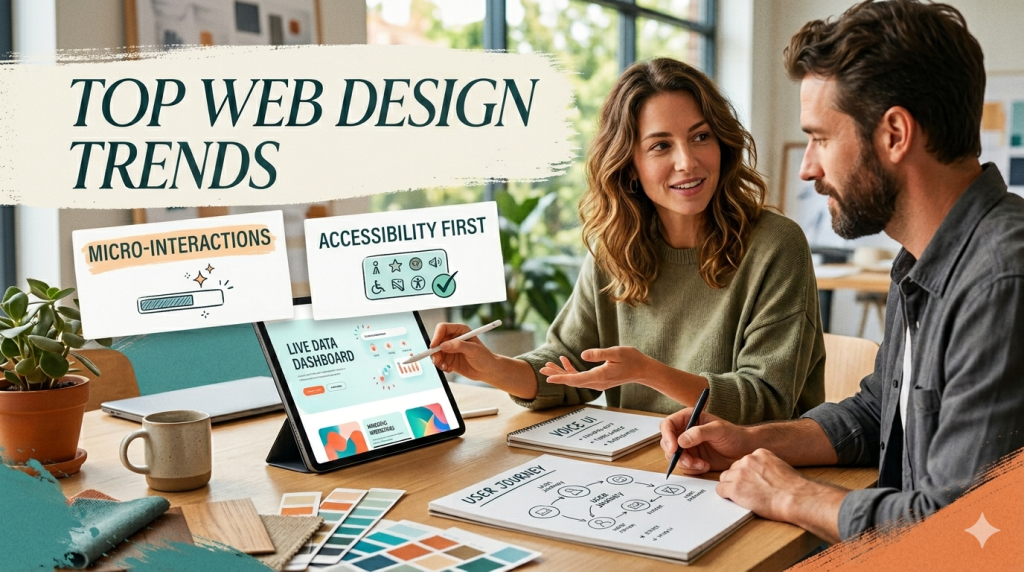
With the rise in competition in all industries, businesses are seeking user experience design services and UI/UX design agency expertise to craft seamless, engaging, high-performing digital experiences. The most up to date UI/UX trends 2026 emphasize that one design must serve both the user and the business..
Why Every Strong Brand Strategy Needs To Begin With Branding
A clearly defined brand design should be among your first thoughts on a business strategy. If you want to market, attract your appropriate customers or even scale up your operations, then you need a brand image. The image that we project out to the world is called branding. No sales exec can outdo a strong branding design. It builds a foundation that influences every business decision, from product development through customer service.
The definition of what makes up a brand identity is much broader than your logo and typography. It includes your visual elements, messaging, values, personality, and how customers view you. When all of these components are in alignment with one another, it builds credibility, which leads to customer trust. This leads to brand recognition and ultimately translates into a successful business time and again. Companies that can sit down and make deliberate investments in brand identity design service outshine all companies that take branding services lightly. The focus on branding drives sustainable competitive advantages, regardless of whether you are a startup or an established company.
What Your Branding Kit Should Include
A comprehensive brand kit presents a brand identity that helps people form first impressions of you. A brand design agency knows the important aspects of branding, and so should you. Key components include:
- Visual Identity: logo, colour palette, typography, and design system
- Verbal Identity: voice and tone of communication
- Brand Core Values: what your company stands for
- Brand Personality: giving your company human characteristics
And all of this combined is the roadmap for which niche you draw in: professional B2B clientele or youthful audiences. Will others see you as creative and risk-taking or reliable and safe? These decisions affect not only branding but also your UX / Web Design strategy.
A premium brand, for instance, may prefer minimalistic designs while a youth-centric brand may explore bright visuals and interactive features. Combining branding and UX-driven web design brings synergy in all interactions.
How Brand Identity Guides Strategy and Business Decisions
If the brand identity beyond a name and logo is not mapped out, the marketing, product development, and hiring decisions lack direction. Branding has often been an area that leads to business trouble if absent.
Once you understand how branding works in the context of user-focused web experiences through data-driven decisions, creating resonance becomes easier. The role of product managers depends on branding that aims to figure out what features resonate with customer experience. Likewise, branding insights are leveraged by marketing teams to fine-tune the customer journey optimization strategies.
Pricing strategy is even intertwined with branding and UX. Such a premium experience, backed by seamless navigation and user-friendly interfaces, tends to come at a price. Conversely, even though a polished interface may increase the perceived value of your site, a cluttered or confusing experience can dampen that perception and negatively impact your ability to improve website conversion rate.
However, solid branding may help small businesses stand out among the big competitors, along with optimizing their website for conversion. For bigger organizations, consistency helps to make sure every department is offering the same experience.
Trends All Businesses Should Follow For Success
To stay competitive, businesses must embrace emerging trends that combine aesthetics with performance. The following trends define UX design trends 2026 and are essential for improving user engagement and conversions:
- AI-Powered Personalization
Websites now adapt content dynamically based on user behavior. This enhances customer journey optimization by delivering relevant experiences in real time.
- Minimalist and Clean Interfaces
Simplicity improves usability. Clean layouts reduce distractions and support landing page optimization by guiding users toward key actions.
- Micro-Interactions and Animations
Subtle animations provide feedback and improve engagement. These elements make interfaces feel responsive and intuitive.
- Voice and Conversational Interfaces
With the rise of voice search, integrating conversational UX improves accessibility and usability.
- Mobile-First and Thumb-Friendly Design
Designing for mobile first ensures seamless experiences across devices, which is crucial for conversion rate optimization (CRO).
- Dark Mode and Accessibility Enhancements
Accessibility is no longer optional. Inclusive design improves user satisfaction and expands your audience reach.
- Data-Driven Design Decisions
Businesses are increasingly relying on analytics to refine layouts, content placement, and CTAs for better website conversion optimization.
These trends highlight how UX-driven web design is evolving into a strategic tool for growth rather than just a creative process.
Custom UX Strategies For Different Business Sizes
You need different approaches for different businesses to be developed under UX / Web Design, but some of the things remain constant (i.e., strong foundations with the right execution).
Startups
Startups must establish credibility quickly. Working with a UI/UX design agency helps to craft professional interfaces that will bring in early users. Even with low traffic, startups can drive high conversions by optimizing their landing pages.
Small Businesses
Small businesses require streamlined solutions that provide maximum benefits when resources are limited. Adopting website optimization practices like understandable CTAs and seamless navigation leads to tangible efforts in increasing website conversion rate with less spending.
Large Corporations
Large organizations require scalable systems. Multiplatform and multilingual use cases require advanced website design services that provide consistency. These businesses often use data-driven web design to continuously improve performance.
The UX Design Process for High-Converting Websites
A streamlined process that combines creativity with analysis is needed to create a successful website:
Discovery Phase
Research involves understanding business goals, user needs, and market competition. The customer journey development is based on research.
Strategy Phase
During this phase, the focus is on defining user flows, content hierarchy, and conversion goals. Well-defined strategies aid in optimization of the conversion rate (CRO).
Design Phase
Designers create wireframes, prototypes, and visual elements. Every decision is tested to ensure alignment with UX-driven web design principles.
Implementation Phase
Once finalized, designs are developed and optimized for performance. Continuous testing ensures improvements in website conversion optimization over time.
Advanced Techniques to Improve Website Conversion Rate
Beyond trends, businesses must adopt practical techniques to enhance performance. These strategies play a critical role in achieving measurable results:
- Clear Call-to-Actions (CTAs)
Direct and visible CTAs guide users toward desired actions, supporting conversion rate optimization (CRO).
- Fast Loading Speeds
Performance directly impacts user experience. Faster websites reduce bounce rates and improve engagement.
- A/B Testing and Experimentation
Testing different layouts and content helps identify what works best, making data-driven web design more effective.
- Simplified Navigation
Easy navigation reduces friction and enhances usability, improving overall customer journey optimization.
- Trust Signals and Social Proof
Reviews, testimonials, and certifications build credibility and encourage conversions.
- Optimized Landing Pages
Focused pages designed specifically for campaigns improve results through targeted landing page optimization.
Implementing these techniques ensures that your website not only attracts visitors but also converts them into loyal customers.
Common UX and Web Design Mistakes to Avoid
No matter how good your strategy, there are some errors that can undermine your efforts:
Inconsistent Design
Users have higher chances of getting confused and trust is diluted because there is no consistency across pages.
Ignoring Mobile Users
Ignoring mobile experiences can drastically limit activation and conversions.
Overloading with Features
Having too many elements can make it hard for users. This is where less complexity shines and often delivers better results.
Lack of Testing
It’s impossible to know what works without testing. This is why constant iteration on your product is crucial.
Poor Accessibility
Accessibility matters because ignoring it means limiting your audience and having a negative impact on user experience.
This way, your UX / Web Design does not fall into some of the most common pitfalls and stays effective and aligned with business goals.
Conclusion
In 2026, UX / Web Design has transcended the shallow waters of just aesthetics; it’s about performance, strategy, and user gratification. Web design will be as simple as users worrying about themselves while businesses focus on their needs in web design, data-driven web design, and conversion rate optimization (CRO). This prioritizes content based on business needs.
We find that everything in design, from the best up-and-coming trends to practical maneuvers, needs to enhance the user experience and ultimately encourage conversions. It would be best to invest in user experience design services and collaborate with a UI/UX design agency if you want your startup, small business, or even large enterprise to not settle for less but have the edge.
And at the end of the day, success comes from delivering digital experiences that are so seamless, natural and enjoyable that they not only attract users but convert them. So, if a business adopts and practices these UX design trends 2026, it would be able to achieve desirable outcomes, in addition to analytics concerns and system growth.