
Your landing page is usually the first significant interaction a potential customer has with your brand in this fast-paced digital world. It’s not just a page, it’s a conversion engine. A good website page can mean the difference between a visitor leaving your website and becoming a qualified lead. Modern businesses are therefore investing heavily in optimizing their landing pages with proven UX / CRO strategies to drive quantifiable results.
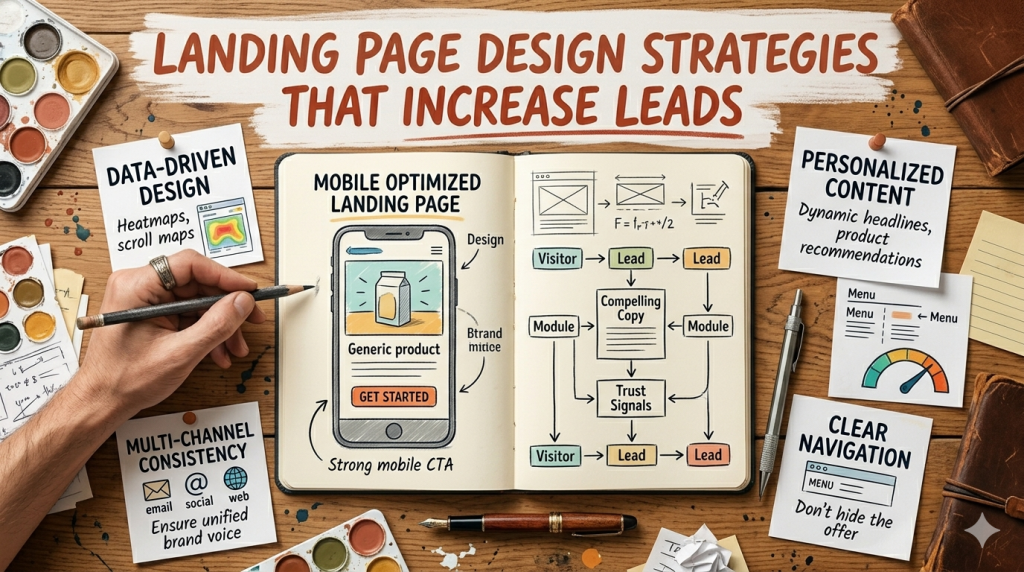
Why Every Strong Web Strategy Needs to Begin with Landing Page Design
The first ideas for a digital strategy should include a well-thought-out landing page experience. Whether you are aiming to collect leads, sell a product, or advertise a service, your page is essential to achieving this. Just as branding influences perception, landing web page design influences action.
A persuasive page speaks louder than any advertisement. It helps users throughout their journey, removes distractions, and focuses everything on value. This is where CRO (conversion rate optimization) comes into play. Merely drawing traffic is not enough, and businesses must ensure that their pages are configured to convert that traffic into something real.
Effective landing pages are built with intention. Every element, from headlines to call-to-action buttons, must align with user expectations and business goals. Companies that prioritize UX-driven web design in their landing pages consistently outperform those that treat them as an afterthought.
What Should Your Landing Page Include?
A good high converting landing page is not just beautiful but strategically designed to convert visitors into leads. Key components include:
- Captivating Value Proposition: Communicate what you do and why it matters instantly
- Powerful Headlines: Hooks in attention and encourages users to scroll
- Strong Call-to-Action (CTAs): Prompts that lead to an action.
- Less Is More: Eliminate distracting, unnecessary links/elements that hinder concentration
- Trust Signals: A testimonial, review or certification that adds credibility
- Conversion-optimized forms: These are basic, user-friendly, and designed to enhance form response
All of these elements work together to create a seamless experience that supports landing page optimization. When executed properly, they guide users through a focused journey, increasing the likelihood of conversion.
How Landing Page Design Guides Strategy and Business Decisions
Landing page design isn’t simply a job for creatives. Always remember, Landing pages are a staple for businesses to test copy, validate offers, and hone their marketing strategy.
Landing pages help marketing teams analyze effectiveness of campaigns. They can see what actions people take and use that information to make data-you web design decisions. This method allows the performance to get better over time.
Landing page insights help product teams as well. Analyzing how users interact with features or offers allows prioritization of development efforts. Also, pricing strategies and messaging are adjusted on the back of landing page performance data.
Following that, landing pages are essential to customer journey optimization. They serve as key signposts that lead users from awareness to action. Companies that invest in enhancing these touchpoints experience large increases in engagement and leads.
Custom Landing Page Strategies for Different Business Sizes
Different businesses have different needs, but the importance of landing page design remains consistent across all sizes.
Startups
When it comes to startups, landing pages are typically one of the first instruments used to gain early customers. A good landing page builds credibility and conveys value in a timely manner. Startups are not only aiming to make a powerful first impression but also beat out bigger players, which is where UX design services come in.
Small Businesses
Small businesses are helped by pages tailored for specific audiences or campaigns (landing pages). They are short on resources and need processes that bear fruit. As a small business or startup, you can partner with a UI/UX design agency to help implement effective landing page strategies while not stretching your budget too thin.
Large Corporations
Large organizations require scalable landing page systems that maintain consistency across campaigns. They often run multiple campaigns simultaneously, making it essential to have standardized processes for website conversion optimization. Advanced analytics and testing frameworks allow these companies to refine their strategies continuously.
The Landing Page Design Process
A process ensures landing pages are attractive and performance-based.
Discovery Phase
During this stage one understands their target market, objectives, and competition. The insights obtained here serve as the basis for data-driven web design, as they ensure that decisions are based on actual user behavior.
Strategy Phase
Here, businesses outline their objectives: be it lead generation, sign-ups or engagement enhancement. The designers shall align the selected design decisions with CRO.
Design Phase
Pros have a script they construct with visual hierarchy. Each of these elements is tested to be sure they help with landing page optimization and improve the user experience overall.
Implementation Phase
The designers get from the visuals to the actual design, developers then implement this. Continuous testing and iteration help refine the page and improve website conversion rate over time.
Common Landing Page Design Mistakes to Avoid
No matter how good a landing page is, common mistakes can ruin them:
- The Curse of Too Much Information: Flooding users with content harms clarity and focus
- Poor Call-to-Action: Unspecific or unclear CTAs that do not direct visitors correctly
- Neglect Mobile Users: Failing to cater to mobile users shrinks reach and conversions
- Absence of Testing: The A/B testing absence causes a loss of improvement opportunities
- The fatal funnel of conversion: The impact of the ad-land and props experience
Avoiding these mistakes ensures that your landing pages remain effective and aligned with modern UX design trends 2026.
Benefits of Optimized Landing Pages
Good landing page design translates into a measurable impact on the business:
- Increased Lead Generation: Targeted designs made to push visitors to act
- Better Conversion Rates: Pinched experiences and less friction
- Improved User Interaction: Clear communication maintains user interest
- Boosted ROI: Streamlined pages deliver more value for spent marketing dollars
scalable growth optimized landing pages help you grow your business in the long run. This process is called Website Conversion Rate Optimization.
Conclusion
Landing page design is arguably one of the most powerful tools in Modern digital strategy. It has a direct impact on users’ interactions with your brand, and whether or not they complete their desired actions. Businesses can make high-converting landing pages that look great by focusing on UX and CRO.
By investing in UX-driven web design services and working with the best of UI/UX design agencies, you also take care that all aspects of your landing page are optimized for performance. Whether it’s customer journey optimization or website conversion optimization, everything helps.
In a highly competitive digital landscape, businesses that invest in strategic landing page design don’t just draw traffic; they convert it. And that’s what ultimately fuels growth.