
Why do some logos instantly signal quality while others get forgotten the moment you scroll past them? The difference usually isn’t talent, it’s process. Custom logo design is more than sketching an attractive icon; it’s a structured sequence of research strategy and revisions that turns a business into something people recognize and trust.
This guide walks through that process end to end from the first discovery call to the final files you should receive so you know exactly what to expect whether you design in-house, hire a freelancer or work with an agency. We’ll also cover the deliverables, timelines and common mistakes that most guides skip entirely plus a straightforward buyer’s guide for comparing your options. If you’ve ever wondered what actually happens between “we need a logo” and “here’s your final brand mark” the breakdown below will make the whole process much less of a mystery.
What Is Custom Logo Design?
Not every “logo service” delivers the same thing. It helps to understand the differences before you start comparing providers:
| Feature | Custom Logo Design | Logo Generator | Template Logo |
| Uniqueness | Fully original | Generic AI-generated | Semi-custom often reused |
| Brand Focus | Built around your strategy and audience | Not brand-specific | Limited brand alignment |
| Ownership | Full ownership | Often limited or shared | Depends on license terms |
A custom business logo is designed specifically for your company’s positioning and audience while a branding logo built through a generator or template is assembled from pre-made elements faster and cheaper but shared with countless other businesses. If you’re searching for an online logo solution it’s worth knowing which category you’re actually getting before you pay.
Why Every Business Needs a Professionally Designed Logo
A logo does more work than most business owners expect. A well-designed mark improves brand recognition builds trust with new customers before they’ve read a word of copy and creates visual consistency across your website packaging and social channels. It also gives you a competitive advantage in crowded markets where an amateur or generic logo can quietly undermine an otherwise strong business.
Beyond appearance business logo design affects marketing performance directly with a clear memorable mark improves ad recall and makes every other marketing asset easier to design consistently. That’s why company logo design is treated as a strategic investment rather than a one-off graphic task and why so many established brands revisit their logos for business companies every several years to keep pace with how the company has grown.
The Custom Logo Design Process Step by Step
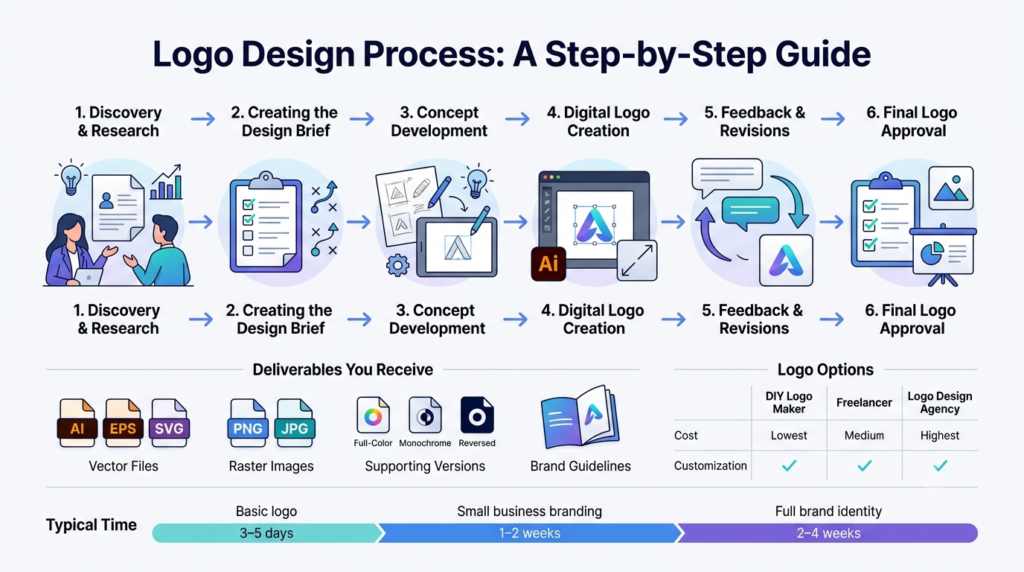
A professional logo project typically moves through six stages. Understanding each one helps you know what to expect and what to ask for at every point.
Discovery & Brand Research
The process starts with understanding the business itself: goals target audience and where competitors already stand visually. This research prevents a logo that looks good in isolation but blends in within your actual market.
Creating the Design Brief
Next the designer builds a brief covering preferred colors typography direction brand personality and any specific preferences or things to avoid. A clear brief at this stage saves significant back-and-forth later.
Concept Development
With the brief set the designer moves into concept development and sketching multiple directions building moodboards and exploring symbolism that connects to the brand’s story. This is where you will typically see the first sense of how the finished mark might design a logo that fits your business rather than a generic industry cliché.
Digital Logo Creation
Once a direction is chosen the concept is built as clean vector artwork usually in Illustrator or a similar tool. Vector-based logo designing ensures the mark scales cleanly from a favicon to a billboard without losing quality.
Feedback & Revisions
You will review the concepts and provide feedback and the designer refines based on your input. A well-run process caps revisions at a reasonable number open-ended revisions tend to drift rather than improve the result.
Final Logo Approval
Once a version is approved the designer prepares the final files and any supporting brand assets. This is the point where deliverables covered next and really matter.
What Deliverables Should You Receive After Logo Design?
This is one of the most overlooked parts of hiring a logo designer and it’s where a lot of clients end up shortchanged. A complete delivery should include multiple file formats each suited to a different use:
| File | Purpose |
| AI | Master editable file |
| EPS | Print production |
| SVG | Website use (scalable) |
| PNG | Transparent background |
| JPG | General use |
| Easy sharing |
Beyond the files themselves ask whether your package includes full-color monochrome and reversed (light-on-dark) versions of the logo a favicon-ready icon version sized-down variants for social media profiles and a brand guidelines document showing correct usage. Providers who skip these extras up front often charge for them later worth clarifying before the project starts not after.
Common Mistakes Businesses Make When Designing a Logo
A few recurring mistakes show up again and again even with well-meaning clients: chasing whatever design trend is popular right now instead of something durable using too many colors over-complicating the graphic with unnecessary detail ignoring how the logo will scale down to a tiny app icon relying on cheap templates that dozens of other businesses already use skipping brand strategy entirely and prioritizing a striking style over basic legibility and function. Avoiding these pitfalls is usually less about design skill and more about slowing down enough to ask the right questions before finalizing anything.
How Long Does Custom Logo Design Take?
Timelines vary based on project scope and how many rounds of revisions are involved:
| Project | Typical Time |
| Basic logo | 3–5 days |
| Small business branding | 1–2 weeks |
| Full brand identity | 2–4 weeks |
What pushes timelines longer: multiple stakeholders reviewing and approving concepts additional revision rounds beyond what’s included and scope that expands to include a full identity system rather than a standalone mark.
DIY Logo Maker vs Freelancer vs Logo Design Agency
Each option makes sense for a different budget and goal:
| Option | Cost | Customization | Branding Depth |
| DIY / Logo Maker | Lowest | Lowest | Limited |
| Freelancer | Moderate | Good | Good but variable |
| Logo Design Agency | Highest | Best | Full brand strategy |
A quick site for a logo generator can work for a very early-stage side project with no budget but it comes with weak ownership terms and a design that isn’t truly yours alone. An online logo service backed by an actual designer or agency costs more but delivers a mark built specifically around your brand rather than assembled from a shared template library.
How to Choose the Right Custom Logo Design Service
Before committing to a provider review their portfolio for range and consistency not just a handful of polished pieces. Ask about their experience with businesses in your industry their revision policy and critically who owns the final files and rights once the project is complete. A provider that leads with brand strategy rather than jumping straight to visuals is usually a stronger long-term choice. Finally confirm turnaround time in writing so expectations are clear from day one.
Frequently Asked Questions
How much does custom logo design cost?
Pricing ranges widely based on provider type and scope from a few hundred dollars for a freelancer to several thousand for a full agency-led brand identity.
How many concepts should I expect?
Most professional processes present two to four initial directions before narrowing down to one for refinement.
Who owns the logo after completion?
This depends on the contract reputable providers transfer full ownership and usage rights once the project is paid in full.
Can I trademark my logo?
Yes provided it’s original and not confusingly similar to an existing registered mark; a trademark attorney can confirm eligibility.
What’s the difference between logo design and brand identity?
A logo is one visual asset; brand identity includes the logo plus color typography voice and full usage guidelines.
Can my logo be redesigned later?
Yes many businesses refresh their logo every several years as the company grows or its positioning shifts.
Conclusion
A strong logo rarely happens by accident and it’s the result of a deliberate process that prioritizes strategy as much as aesthetics. Understanding each stage from discovery through final delivery helps you set clearer expectations and avoid the common mistakes that lead to a rushed or generic result. Investing in professional custom logo design gives your business a mark built to last rather than one you will be redoing again in a year. Done well that single asset becomes the foundation every other piece of your brand is built on.